Strathroy Age Dispatch
20 July 2011
War letters find a home online
By Brianna Hammer
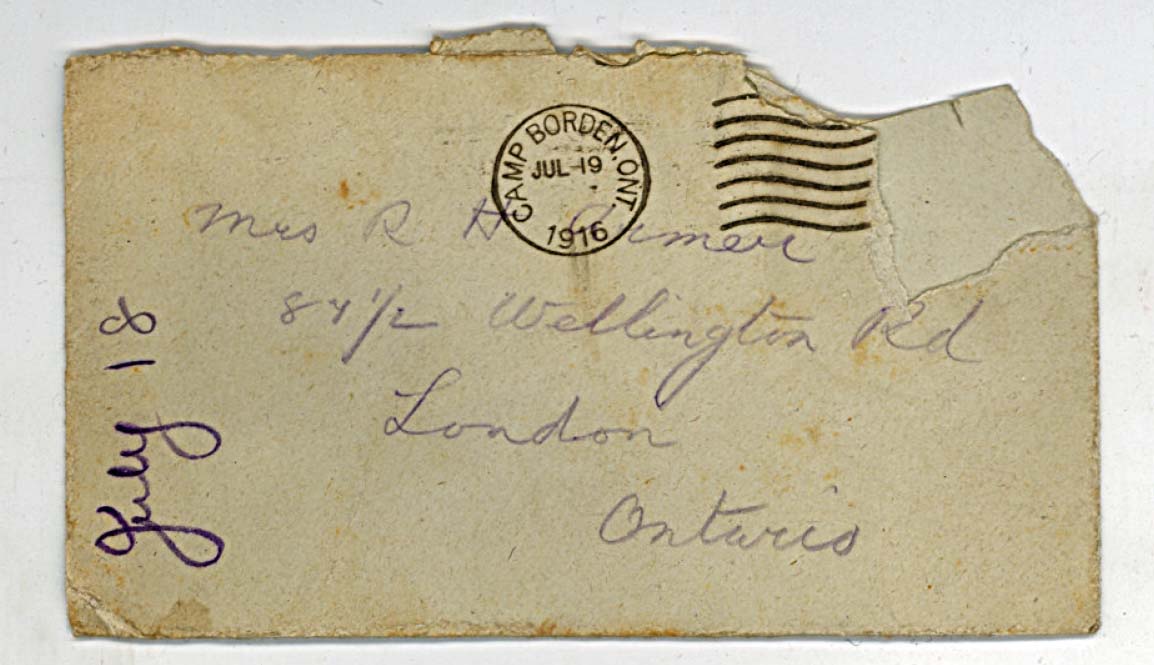
When Private Richard Harold Armer first arrived at the newly-opened Camp Borden in July 1916, he was far from impressed.
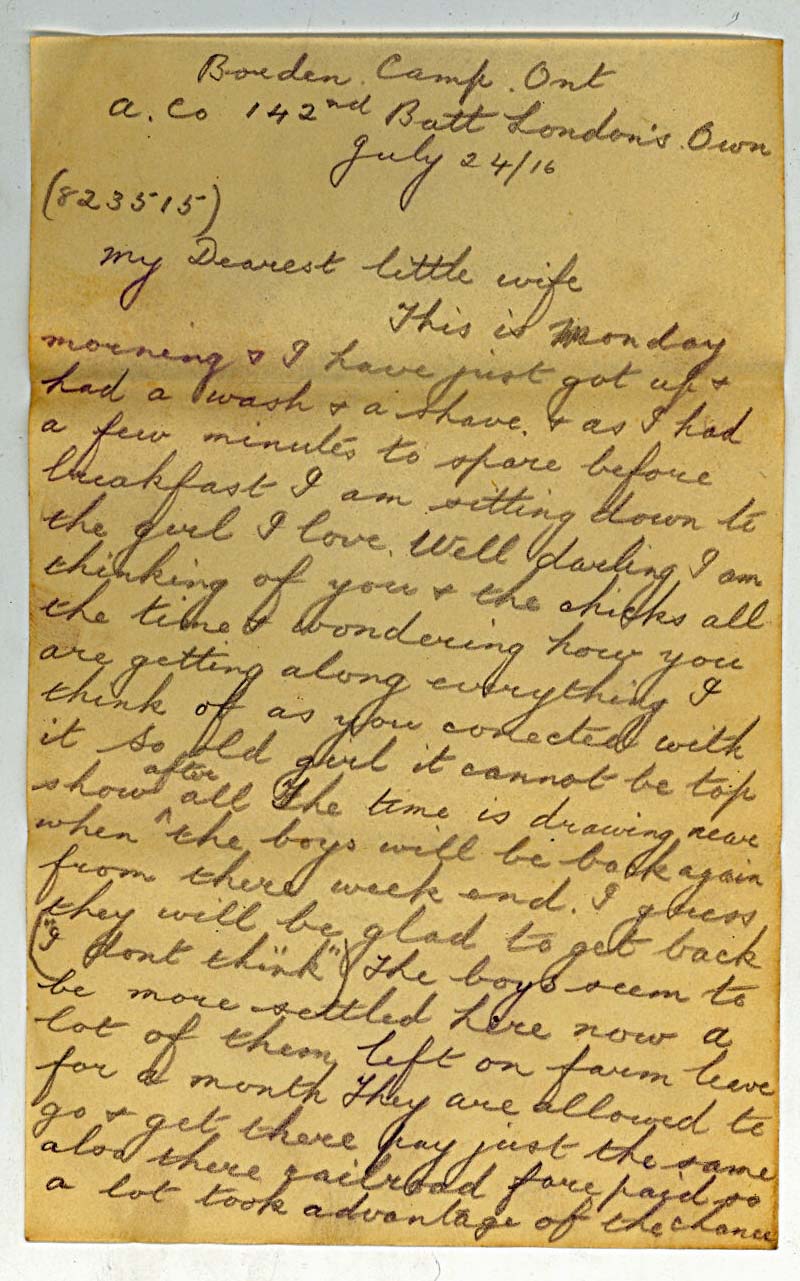
"This is an awful place, all trees and shrubs growing in sand… our tent was pitched where there had been a fire and there was plenty of black dust flying around," he wrote to his wife. "I don't like this place one bit [but] I am keeping well. I'm in the army now."
Richard (Dick) Armer was a member of the 142nd Battalion—"London's Own," he scribbled at the top of one of his letters home. He was a recent immigrant, however, having arrived from Ulverston, England just four years prior to enlisting. When Dick signed up to fight in the First World War, he was the head of a young and growing family in London, Ontario that included children William and Margaret, and wife Mabel, who was expecting the couple's third child.
Pte. Armer, who strongly believed it was his duty to serve Canada and the old country, spent about four months at the Borden training camp west of Barrie. In late October 1916 he and other soldiers boarded a train to Halifax, and then a ship to Europe. Dick arrived in France to fight in April 1917.
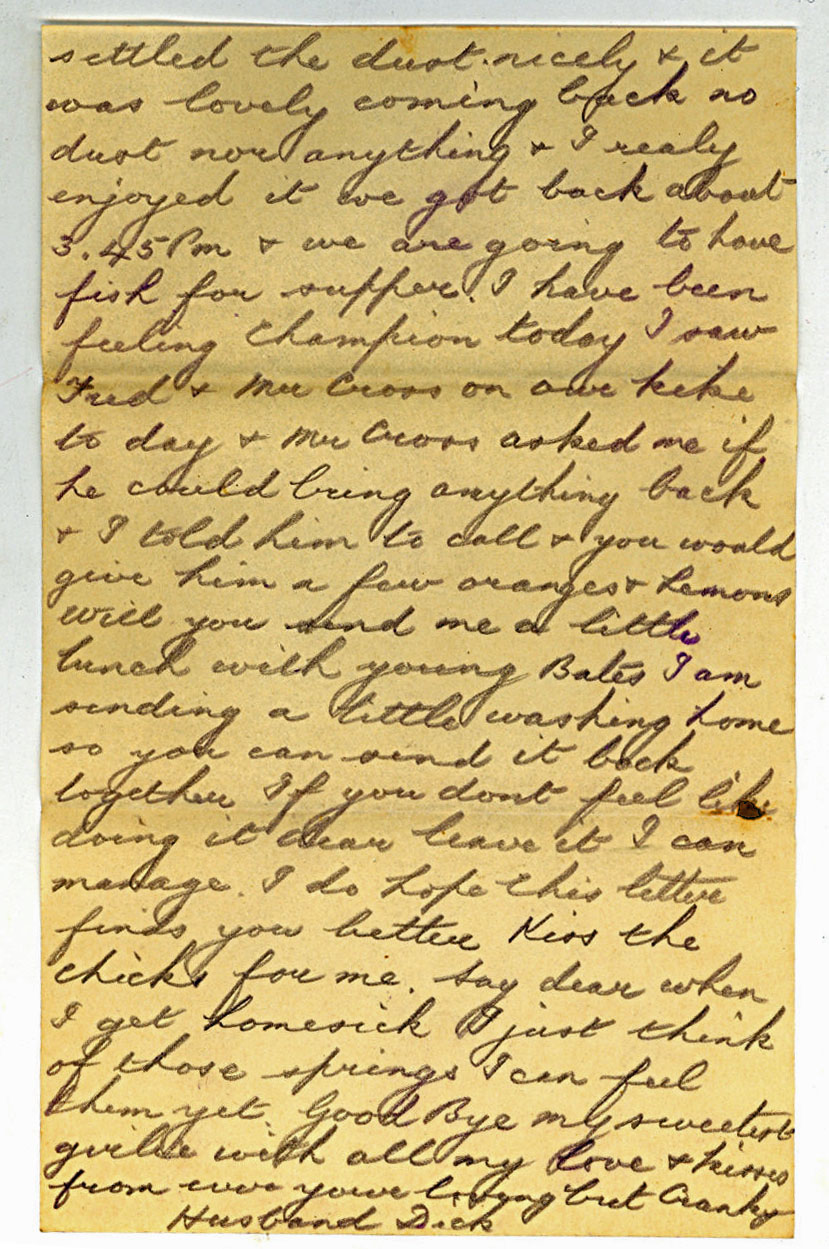
His journey and experiences were documented in approximately 400 letters he wrote to his wife during his time in service. These letters were kept by descendants of Dick's children, who still reside in Middlesex County. Late last year the family made the letters available to Museum Strathroy-Caradoc for digitization by volunteer John Sargeant, who scanned each piece of correspondence and read Dick's story with great interest.
"It took several months of weekly sessions to where my eyeballs ached and my seat was numb, but eventually they were all scanned," John said. "As I've continued to work with the letters, I've been impressed with Dick Armer. I think I would have liked him very much."
John has a great passion for researching Canadian military history and servicemen, particularly those who served in the First World War. His dedication extends to his work with the Sir Arthur Currie Memorial Project, a group planning to erect a statue honouring First World War general and Strathroy-native Sir Arthur Currie. The letters of Dick Armer, a contemporary of Arthur Currie's, provide a meaningful glimpse into the war from a Private's viewpoint.
"Each of the letters is a treasure," says John. "Woven into Dick's feelings about missing his family, some incidental business matters, and his anxiety about his wife's pregnancy, are little vignettes of a World War One soldier's life."
John was impressed by the regularity of Dick's writing and his consistent affection for his wife and children. "He would tell his wife to 'kiss the chicks', meaning his children," said John. "The letters were full of hugs and kisses."
Many of the letters capture Dick's emotional struggle between leaving behind his beloved family, and holding a deep conviction that his duty was to fight for his country.
"I cannot express to you how much I miss you all and long for a kiss and a good hug," he wrote to Mabel on July 10, 1916. "Give them [William and Margaret] a good love-up and kiss from Daddie and send me a snap of them for Daddie is lonely."
Museum staff, John Sargeant and the descendants of Private Richard Armer decided to honour the memory of Dick and his contribution to the war effort by publishing his letters online. The story can be followed online via "Dear Old Girl"
(http://dearoldgirl.blogspot.com), a blog maintained by John and titled after Dick's favourite term of endearment for Mabel. John posted the first letter on June 29, 2011, 95 years after Dick wrote it on June 29, 1916. The rest of the letters will follow this pattern, allowing followers of the blog to read along and experience Dick's life in the army in real-time.
Museum Strathroy-Caradoc is pleased to share such meaningful insight into the First World War with the community, thanks to the generosity of Dick and Mabel's descendants. Readers are invited to comment on letters and blog posts, and to follow Private Richard Harold Armer on his journey at
http://dearoldgirl.blogspot.com.




 Here is some information on the battalion Dick Armer joined. It was known as the142nd Battalion (London's Own)